



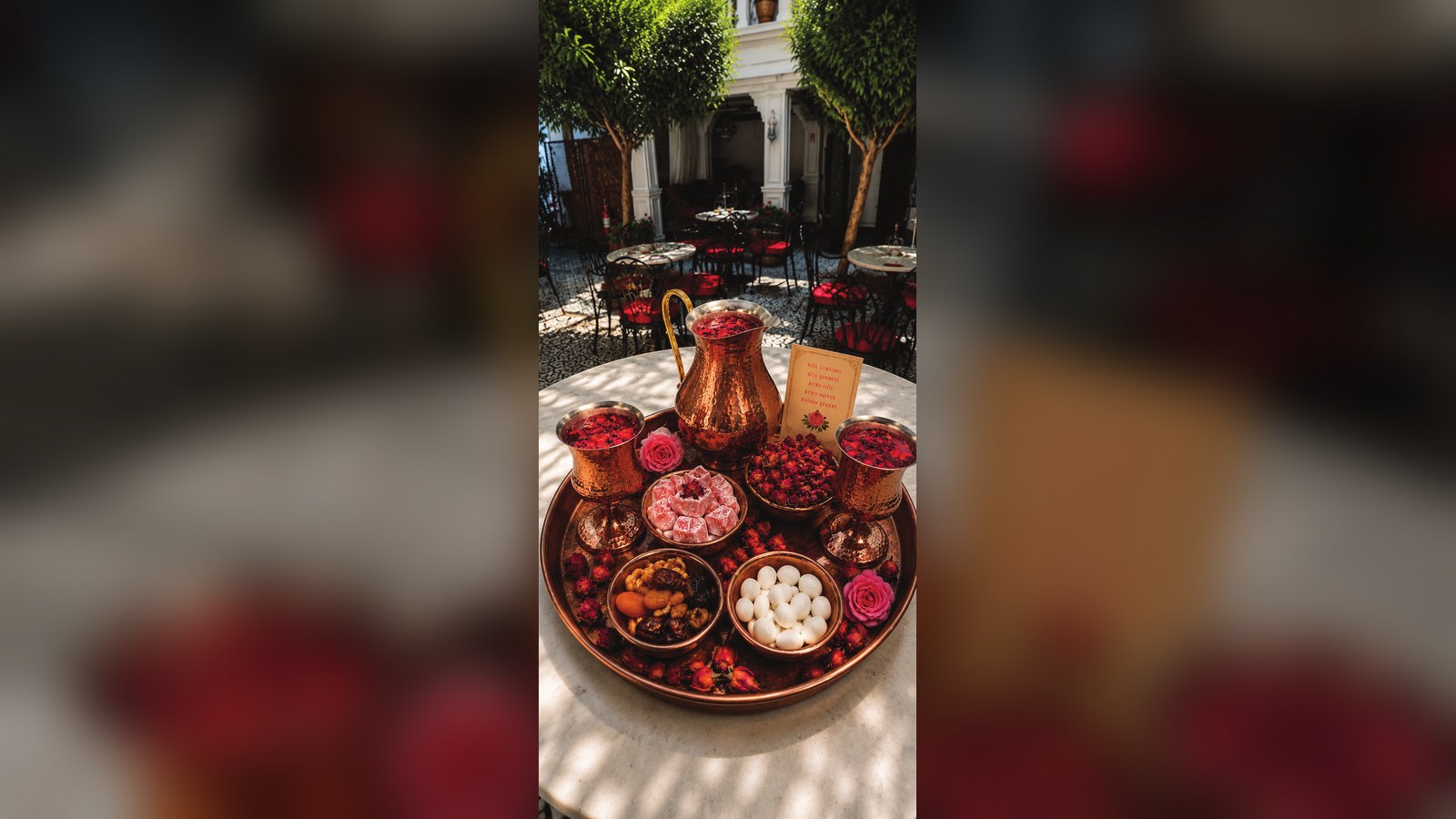
The most common problem when choosing where to eat in Sultanahmet is this: you pick a place for its location and compromise on the kitchen. Yet Turkish cuisine is far too broad to be summed up by a single plate. From the breakfast table to soups, from pastries to manti, from meatballs to milk-based desserts, this tradition can be tasted comfortably in the middle of the historic peninsula.
In this article we have gathered the dishes worth trying at Aura Garden for anyone who wants to explore Turkish cuisine in Sultanahmet, which dish suits which time of day, and the short stories behind some of these flavours.
Starting the day: Turkish breakfast
The first table that comes to mind with Turkish cuisine is, without question, breakfast. Rather than a single main dish, a large number of small plates arriving at once is what sets this tradition apart from most breakfast cultures around the world.
Breakfast is served in two forms here. The buffet suits guests who prefer to choose for themselves. The plated Special Turkish Breakfast brings all the components of the classic table together: freshly squeezed orange, grapefruit or pomegranate juice; a basket of Turkish pastries; Turkish sausage, clotted cream, honey, white cheese, yellow cheese, black and green olives, pastry varieties, a simit sandwich, yoghurt, tomato, cucumber, sunny-side-up eggs, and coffee or Turkish tea alongside.
Breakfast specials
For guests who would rather have a single plate than a whole spread, there are separate options:
- Fried Egg with Turkish Sausage: Served with rösti potatoes and tomato gratin, one of the most familiar plates on the table.
- Pastry Varieties: Among the oldest baked goods in the tradition; the selection changes daily.
- Simit Sandwich: With yellow cheese and tomato — light and practical.
- Natural Honeycomb and Clotted Cream: Simple, but it defines the character of the table.
- Turkish Cheese Varieties: For guests who want to taste cheeses from different regions side by side.
Soup: Ezogelin
In Turkish cuisine, soup opens the meal. The Ezogelin soup on the menu is made with tomato or tomato paste, rice and red lentils. It takes its name from Ezo Gelin, from the village of Urus (now Dokuzyol) in the Oguzeli district of Gaziantep. A warming, light start with a story behind it.
Starters and sharing plates
At a crowded table the most enjoyable side of Turkish cuisine is sharing what arrives in the middle. The menu has several strong options for exactly that:
- Pacanga Pastry: Made with beef pastrami, yellow cheese, pepper, tomato and Mediterranean greens, this is a classic meyhane starter where cured beef meets pastry.
- Crispy Calamari: With spicy tomato sauce and garlic mayonnaise.
- Crispy Shrimp: Served with the same sauces, for guests who enjoy seafood.
Anatolia’s pasta: Traditional Anatolian Manti
Manti is one of the most labour-intensive dishes in Anatolian cooking. The Classic Anatolian Manti on the menu is served with tomato sauce, red butter, sumac and dried mint. Those four elements define its character: the richness of the butter, the sourness of the sumac and the aroma of dried mint all working together.
It is a dish we often recommend to guests trying Turkish cuisine for the first time — familiar in form, yet distinctly characteristic.
Main courses: meatballs and beyond
Kofte Sura
Meatballs are the most widespread main course on the Turkish table, and almost every region has its own version. Kofte Sura is served with rice, grilled tomato, pepper and lavash bread — all the classic accompaniments in place. It works both as something to share and as a satisfying meal on its own.
Traditional Meat Wrap (Doner)
Doner is among the flavours of Turkish cuisine best known outside the country. On the menu the Traditional Meat Wrap comes with chilli tomato sauce, Mediterranean greens and pan potatoes. A practical option for a quick but satisfying midday break.
Grilled Meatball & Halloumi Wrap
For guests who want to try meatballs in wrap form, this option comes with caramelised onion, halloumi cheese and a vegetable mix — traditional meatballs in a more contemporary presentation.
Chicken Chops
Served with grained tomato sauce, cracked potatoes with fresh herbs and broccoli; a lighter alternative among the main courses.
Traditional Anatolian Salad
In Turkish cuisine a salad is more than a side dish; it balances the table. The Traditional Anatolian Salad is made with tomato, green pepper, cucumber, onion, white cheese and black olives. If you are looking for something refreshing alongside a rich main course, this is the right choice.
Desserts: the milky and the cool
Turkish dessert culture is usually associated with syrup-soaked pastries, but milk-based desserts are every bit as deep-rooted. The menu has examples from both worlds:
- Baked Rice Pudding: With its browned top, the classic milk dessert. One of the most balanced choices after a heavy meal.
- Maras-style Ice Cream: Known for its dense texture, unique to Türkiye.
- Baklava with Ice Cream: Bringing the crispness of baklava together with the coolness of ice cream.
- Caramel Trilece: One of the most loved milk desserts of recent years.
- Strawberry Magnolia: For a lighter finish.
Turkish coffee and tea
A Turkish cuisine table is not complete without coffee or tea. Turkish coffee is not merely a drink; it is a ritual that gives conversation permission to run long. Turkish tea takes its place beside every meal throughout the day. After a long dinner, a cup of coffee in the garden becomes the quietest part of the evening.
What to order, and when
- Morning: Special Turkish Breakfast, or Fried Egg with Turkish Sausage.
- Midday: Traditional Meat Wrap or Grilled Meatball & Halloumi Wrap, with a Traditional Anatolian Salad alongside.
- Evening: Start with Ezogelin soup, share a Pacanga Pastry, then Kofte Sura or Classic Anatolian Manti.
- Late night: Baked Rice Pudding or Maras-style ice cream, with a Turkish coffee.
You can review the full list and current prices on our menu.
Where to eat: location and setting
Aura Garden is at Alemdar, Ticarethane Street No:10, within the grounds of the Sura Hagia Sophia Hotel. Being within walking distance of Hagia Sophia and Topkapi Palace lets you place a comfortable break in the middle of your sightseeing plan. There are two seating areas — a garden with a pool and a modern indoor salon — and the venue is open every day from 07.00 to 03.00.
If you are curious about what a day in the garden looks like, see our article on the garden restaurant experience in Sultanahmet; if you want to plan around the view, take a look at our guide to restaurants with a view near Hagia Sophia.
Frequently Asked Questions
Are there options for vegetarian guests?
Yes. The Vegetarian Wrap, Veggie Burger, Penne with Pesto and Grilled Vegetables, Mediterranean Salad and several breakfast plates are among the meat-free alternatives.
Is allergen information available on the menu?
The menu carries symbols for gluten, dairy, eggs, sesame, mustard, soy, celery, fish, crustaceans, peanuts and hard-shelled fruits. You can share any specific dietary requirements with the service team.
Until what time is breakfast served?
The venue opens at 07.00. For exact breakfast service hours it is best to get in touch before your visit.
Can a Turkish cuisine menu be arranged for a large group?
Yes, custom group menus can be prepared. You can send your request through our contact page.
In closing
For anyone wanting to try Turkish cuisine in Sultanahmet, the point is not to eat one “famous” dish but to see the table as a whole. A menu running from breakfast to soup, from pastry to manti, from meatballs to milk desserts lets you taste the breadth of this tradition in a single day. To reserve a table use our reservation page, and for more about the venue see our about page.